St David's Day: The Incredible True Story Of Wales' Patron Saint Who Changed A Nation
St David, born in the fifth century, became Wales' patron saint through a life of miracles, ascetic devotion, and his legendary final words.

Who Was St David And Why Does Wales Celebrate Him Every March 1?
Every year on March 1, millions across Wales and Welsh communities worldwide celebrate St David's Day, honouring the patron saint of Wales, Dewi Sant. But the man behind the feast day lived a life far more remarkable than most realize.
Born on the southwestern coast of Wales near present day St Davids in Pembrokeshire sometime between 462 and 515 AD, David's birth was said to have occurred during a violent storm on the cliffs. Legend tells that his mother, St Non, gripped the rocks so hard they split beneath her fingers.
David became one of the most renowned bishops, preachers, and teachers of sixth century Britain. He established monasteries and churches across Wales, England, and Brittany. He reportedly made a pilgrimage to Jerusalem and brought back a stone that is now housed at St Davids Cathedral. His most significant foundation was a monastery at Mynyw, which eventually became St Davids, the smallest city in the United Kingdom.
His life was marked by miraculous accounts. Most famously, while preaching to crowds at Llanddewi Brefi, the ground reportedly rose beneath him to form a hill so that everyone could see and hear him. A white dove reportedly landed on his shoulder, a symbol of divine blessing.
David lived an ascetic life, ploughing fields by hand, maintaining a vegetarian diet, abstaining from beer, and surviving on leeks and water. He died on March 1, 589 AD, after reportedly living over 100 years. His final words have become cherished in Welsh culture:
"Do the little things in life."
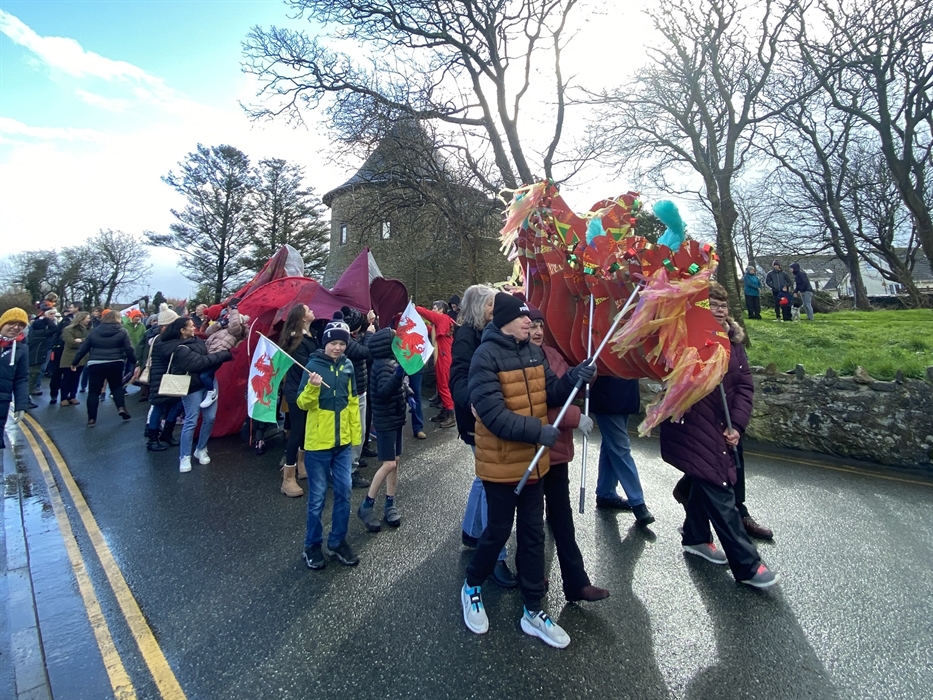
Since the 12th century, March 1 has been observed as St David's feast day. Today, celebrations include vibrant parades in Cardiff and towns across Wales, traditional Welsh music, dancing, and the display of the red Welsh dragon flag alongside St David's black and yellow cross. Traditional foods such as cawl, Welsh rarebit, Welsh cakes, bara brith, and laverbread are enjoyed by families and communities.
St David remains the only British and Irish patron saint who was actually born in the nation he represents.
The Legacy Of Wales' Patron Saint And What Christians Can Learn From His Life
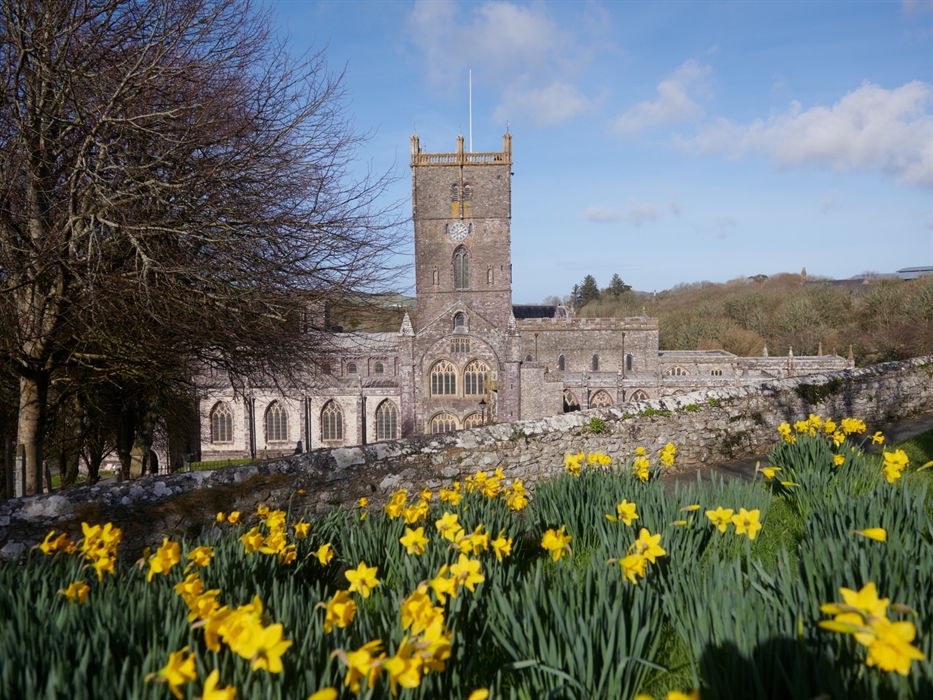
Both daffodils and leeks serve as symbols of Wales. The leek connects directly to St David's legendary instruction to Welsh soldiers and his own simple diet. The daffodil blooms perfectly in time for the celebration and carries the Welsh name cenhinen Bedr, meaning "Peter's leek," linking it to older Christian traditions.
His life exemplifies faith, humility, discipline, and service. His greatest legacy is a reminder that faithfulness in the smallest things matters most.
The Crusader's Opinion
In a world obsessed with fame, power, and spectacle, St David's final words cut through the noise like a sword: "Do the little things." Here was a man who ploughed his own fields, drank only water, and refused luxury while the world crumbled around him. He built the Church not with grand campaigns, but with quiet obedience. That is the kind of Christianity the West has forgotten. We chase relevance while our ancestors chased holiness. Wales still celebrates this man because his faith was not performative. It was bone deep. Every Christian alive today should take that lesson to heart.
Take Action
- Visit St David's Cathedral online or in person to learn more about the legacy of Wales' patron saint.
- Celebrate St David's Day on March 1 in your local community. Organize a prayer gathering or church service honoring the faith and humility of Dewi Sant.
- Share the story of St David with young Christians. His example of "doing the little things" is a powerful witness in an age of distraction.
- Support Christian heritage preservation in Wales through Visit Wales and local Welsh churches.
- Donate to The Shepherd's Shield to support the defence of persecuted Christians around the world.