
Prison Sentences for Five Christian Converts


Remember their names in your prayers: Hesameddin (Yahya) Mohammad Junaidi, Abolfazl (Benyamin) Ahmadzadeh Khajani, Morteza (Calvin) Faghanpour Sasi, and two other individuals whose names haven’t been publicly revealed.
On September 17, 2025, an Iranian appellate court upheld prison sentences for five Christian converts, each facing more than eight years in jail for activities related to their faith. The ruling was reported by International Christian Concern on October 10, 2025.
The five believers were originally convicted on charges related to their conversion from Islam to Christianity and their involvement in house church activities. Iranian law considers apostasy from Islam a serious offense, though the specific charges in this case centered on "acting against national security" and "propaganda against the Islamic Republic."
The appellate decision came weeks after a related case also denied appeal, indicating intensified judicial pressure on Christian converts in Iran. According to persecution monitoring organizations, Iran's Islamic Revolutionary Courts have systematically targeted converts from Islam, viewing them as threats to the Islamic character of the state.
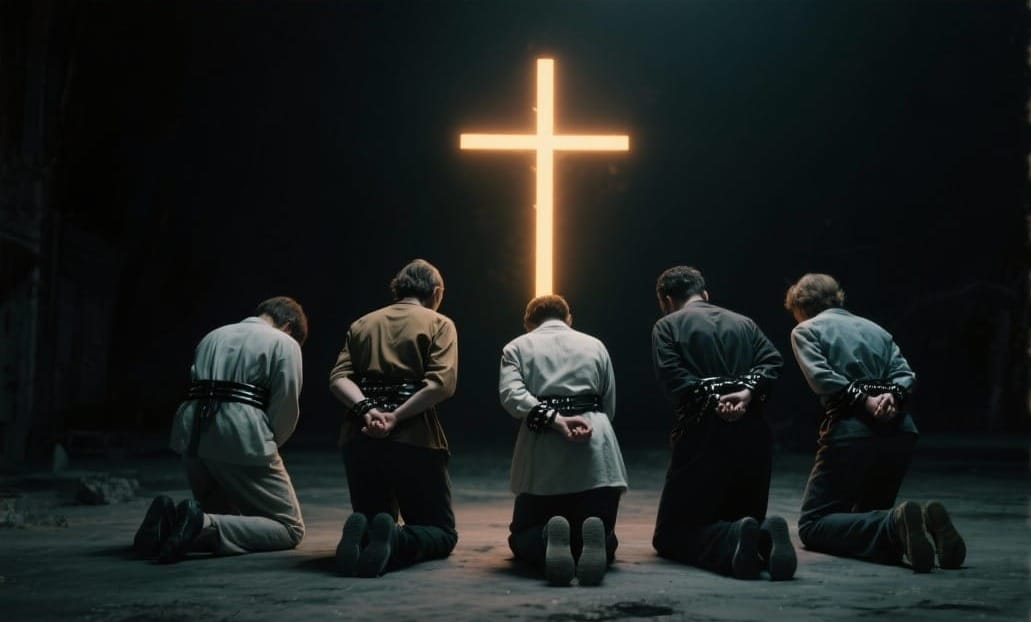
Each of the five converts faces sentences exceeding eight years in prison. The convictions include participation in house churches, possession of Christian literature, and evangelism activities. Iranian authorities consider any attempt to convert Muslims to Christianity as illegal propaganda.
The International Christian Concern statement noted: "Judicial pressure on converts intensifies," highlighting that the ruling "demonstrates shrinking space for Christian practice and proselytism in Iran." The organization called for international pressure on the Iranian government to respect religious freedom.
Iran's penal code does not explicitly criminalize conversion from Islam, but courts routinely use national security charges to prosecute converts and house church leaders. Sentences can include lengthy prison terms, often served in harsh conditions alongside violent criminals and political prisoners.
THE CRUSADERS OPINION
Iran's persecution of Christian converts exposes the fundamental incompatibility between Islamic theocracy and basic human freedom. These five believers face eight-plus years in prison for the "crime" of following their conscience and worshiping Jesus Christ. This isn't complexity requiring nuanced analysis; it's straightforward religious tyranny deserving unequivocal condemnation.
Consider the stark double standard Western nations apply. When a Muslim faces even minor discrimination in Europe or America, human rights organizations mobilize, media coverage intensifies, and politicians issue statements. Yet five Christians face nearly a decade in Iranian prisons for their faith, and the response is virtual silence. Where are the UN resolutions? Where are the economic sanctions specifically tied to religious persecution? Where is the sustained diplomatic pressure?
The charges themselves reveal the absurdity: "acting against national security" and "propaganda against the Islamic Republic." Translation: believing Jesus is Lord threatens the Iranian state. This admission should prompt serious reflection. If Christianity poses such danger to Islamic governance that it must be criminalized, what does that reveal about Islam's confidence in its own truth claims? Secure belief systems don't require state violence to maintain adherence.
For Christian unity, Iran's persecution demands unified response across all traditions. These five converts likely came from Muslim backgrounds and joined house churches that might be charismatic, evangelical, or connected to various Protestant traditions. Their denominational affiliation is irrelevant; they're our brothers and sisters facing imprisonment for the faith we share. Reformed, Catholic, Orthodox, Pentecostal believers must speak with one voice: this persecution is intolerable and those imprisoned must be freed.
Western Christians must also confront our complicity through indifference. We live in nations with diplomatic leverage, economic relationships, and international platforms. Iran depends on trade, seeks sanctions relief, and desires international legitimacy. Every one of those pressure points should be used to advocate for imprisoned believers. When Western governments negotiate with Iran over nuclear programs or regional issues, religious freedom must be non-negotiable precondition for engagement.
The converts' courage deserves recognition. They knew the risks. Islamic apostasy law isn't secret; everyone in Iran understands that leaving Islam for Christianity invites persecution. Yet these five chose Christ anyway, valuing eternal truth over temporal safety. Their witness shames comfortable Western Christianity that compromises biblical teaching for social acceptability while facing no persecution whatsoever.
Here's the hard truth: Islamic societies that criminalize conversion reveal Islam's dependence on coercion rather than persuasion. Christianity spread through the Roman Empire despite three centuries of persecution, growing because believers willingly faced death rather than deny Christ. Islam in many countries maintains demographic dominance partly through laws making departure illegal and dangerous. This isn't religious confidence; it's spiritual insecurity backed by state violence.
The irony is profound: these five Iranian converts face eight years in prison for peaceful religious practice. Meanwhile, Western nations allow mosques to operate freely, permit Islamic proselytization, protect Muslim religious expression under law, and even accommodate sharia practices in some legal contexts. Reciprocity doesn't exist. Christians imprisoned in Iran for faith; Muslims free to practice in the West. This asymmetry should inform Western policy, yet it's largely ignored.
For a pro-Western, pro-Christendom perspective, Iran's persecution illustrates why Christendom matters. Western civilization, despite its flaws and frequent failures, emerged from Christian principles that eventually recognized religious conscience as fundamental human right. The Reformation's legacy, whatever its costs, included the principle that faith cannot be coerced. Islamic theocracies like Iran reject this entirely, maintaining that religious uniformity must be enforced through state power.
This doesn't mean Western nations should mirror Iran's intolerance. Christianity's strength lies partly in its ability to flourish without state coercion, in its appeal to conscience and reason rather than force. But it does mean Western Christians should stop pretending all religious systems are equivalent. They're not. Systems that imprison believers for peaceful religious practice are inferior to systems that protect religious freedom, and we should say so clearly.
The five converts also represent Christianity's future in unexpected ways. The faith is growing in Iran despite persecution, perhaps because of it. House churches multiply as the state cracks down. Young Iranians, disillusioned with the Islamic Republic's brutality and corruption, turn to Christianity in surprising numbers. The regime's response? More arrests, longer sentences, intensified surveillance. It won't work. The blood of martyrs remains the seed of the Church, and Iranian soil is being watered with it.
Practically, Western Christians should support organizations working with Iranian believers. Ministries providing secure communication tools, online biblical resources, and support networks for persecuted believers need funding and prayer. When converts eventually flee Iran as refugees, Western churches should prioritize their resettlement and integration. Real solidarity means concrete action, not just social media sympathy.
The Iranian church's courage should also convict Western Christians of our cowardice. These believers risk everything for house church gatherings we would find primitive and uncomfortable. They face prison for possessing Bibles we leave on shelves unread. They endure interrogation for evangelism we're too timid to attempt in contexts where it's completely legal and safe. Who has more faith? Who takes Jesus more seriously?
Finally, Iran's persecution reminds us that religious freedom isn't humanity's natural state; it's a hard-won achievement of Christian civilization now under threat even in the West. When we see what Christians endure in Islamic theocracies, we should fight harder to preserve freedom in our own nations, recognizing that liberty of conscience is precious, fragile, and worth defending.
The five Iranian converts will likely serve their full sentences unless international pressure forces their release. They'll endure years of imprisonment, separation from family, and constant pressure to recant their faith. They'll face it anyway, because they've tasted Living Water and won't return to broken cisterns. Their perseverance condemns the persecutors and inspires the persecuted worldwide.