For when I am weak, then I am strong

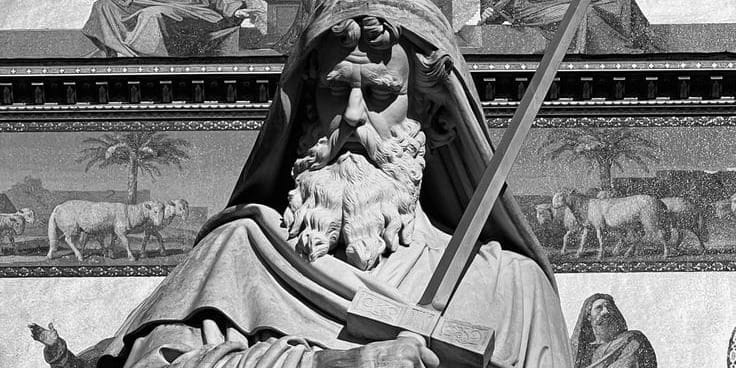
2 Corinthians 12:9–10:
9 But he said to me, “My grace is sufficient for you, for power is made perfect in weakness.” So I will rather boast most gladly of my weaknesses, in order that the power of Christ may dwell with me.
10 Therefore, I am content with weaknesses [...] for the sake of Christ; for when I am weak, then I am strong.
While being a huge fan of Paul's literature and persona, this passage has at first been a real thorn in the flesh to say it in his words. The only difference is that his thorn was there to remain for ever, while this difficulty to understand what Paul is saying here - faded.
As with many things concerning God, clarity rarely comes all at once. Nothing suddenly becomes perfectly clear after a single prayer of discernment. For me, understanding this required a lot of time and Holy Spirit's [from now on, shortened in HS] favorite when it comes to teach us children - experiences.
Physical suffering
I'm sure most people have experienced one of those severe flus that leaves one unable to get out of bed. Some live with food intolerances or allergies, or anxiety, exhaustion. Some deal with a profound lack of self-worth. Others are diagnosed with chronic conditions and some live with still poorly understood illnesses. Discomforts, seasonals, or conditions easily shape a person’s day to day life, because we don't know how to deal with the aching properly if we're not guided. Especially if we're not Christians, but it happens to us too.
Two most frequent ways to face it are: anger, not acceptance, drift from God, God blaming. This of course is the worst way, but still human. The second is a lot nicer: one may not understand the why, but may keep on praying to give them the courage to remain calm and not to become mean. There's a third way I'll get to later.
Suffering is often misunderstood when it is quiet, it easily becomes something one would rather hide and act as if it isn't there rather than answering questions and feeling like a victim. Although, I'm sure none of us decided to pick our health, that's what was given to us! Let me remind you: there's a picture behind it, there's a plan even if we may never get the answers as to why.
The thing is that physical weakness often accompanies mental fog and it can become an entry point for spiritual attack. Physical fragility can make a person emotionally unstable, more vulnerable to discouragement, and feelings of inadequacy like I am a burden, I am useless, I contribute nothing. So this human suffering, while being absolutely normal, can generate a particularly destructive form of doubt therefore before reaching desperation we have to discern how to face it: if it's given to us, we can overcome it, or we can at least - as i like to say - make peace with it. Paradoxically, even in suffering, there is something profoundly consoling: nothing is hidden from God. No tear goes unseen, no interior struggle remains unknown. What wounds us does not escape Him, even when we ourselves struggle to understand it.
The suffering of the spirit
doubt
When physical suffering persists it begins to affect the interior life. What was first pain becomes confusion; what was fatigue becomes uncertainty. Slowly, suffering takes on a spiritual dimension: prayer loses clarity, and God’s presence feels distant or silent. This silence is often misinterpreted as absence, while the scripture clearly teaches that it is God's teaching (cf Jeremiah). Faith begins to collapse through a quiet weakening and purpose is questioned. The trust that God can work through human limitation begins to erode - because some things appear to be just "too heavy".
Here, doubt emerges - not as an intellectual objection, but as an existential temptation. It does not initially deny God, it insinuates something more subtle: that God may no longer be attentive, that His plans may not be good after all, or that He asks too much of human weakness. Sounds familiar? - who is the master of lies if not he himself the devil? You've been under attack, that's it.

When this happens the person begins to question themselves in the identity as a child of God, obscured by self-assessment. Worth is measured by strength, productivity, and visible effectiveness - precisely the things suffering has taken away. The devil loves to take away as much as he can to provoke your doubt! (cf Job)
Prolonged suffering intensifies this dynamic: the longer pain lasts, the more it shapes perception. The danger doesn't specifically lay in questioning, but in allowing doubt to become a lens through which everything else is interpreted!
At this stage then, the greatest spiritual risk is, again, self-referentiality. Because when attention turns inward you circle endlessly around your limits, failures etcetera and enter victimhood and self pity; in which God play no part at all - if not just the one to be blamed.
Thus the HS aid is crucial. Suffering isn't good or pleasant in itself and the Father knows it, but the He does not fail - ever - to sustain those He has called.
The Holy Spirit as the answer
The answer to spiritual doubt then is not greater self-confidence, nor a renewed effort to regain control. It is a change of posture: from self-measurement to surrender. Surrender to God's plan with the HS's guide.
Paraphrasing the words of a professor: it is a lot easier to base our faith on our flaws and concrete fatigues rather than our skills and great assets, for the first ones might never be taken away from us and we have limited power on them - while the seconds are most definitively the devil's first target (cf Job). Not only, we risk on taking pride for the things we have achieved - giving us the false perception that whatever we have was conquered by our own actions and God is completely out the picture.
But viceversa it's easy to blame Him for our limits.
Let me explain: when suffering strips nice/glowy things away, it exposes how fragile the measure of our "happiness" or "appearance" truly is.
Trusting in the HS begins precisely here: when worth perception and human "greatness" are no longer calculated, we are left with what we actually are - flawed, little humans, made of ash. But!
It's an absolute beautiful image because 1) that makes us inherently codependent to the Father as much as a child would be and 2) we are made in His image - so it can't get more beautiful than that.
This is trust! It is an act of obedience and spiritual resistance. Scripture does not present God’s action as dependent on human efficiency, but on availability. The HS does not wait for ideal conditions: He acts in weakness, confusion, and limitation, often precisely when we feel least qualified. This is the manner God has chosen to reveal his power - which I personally find hilarious - a logic that overturns the enemy’s accusations and renders them futile.

So when the soul carries alone what was never meant to be carried alone - because we were self sufficient and judgmental - the HS is our true mentor. But it's also true that he doesn't dull pain, and he's not a magician. Rather, he comes to teach and remind our filial identity that vastly surpasses any type of pain. He reminds us who we are: theologically, from baptism and then again from confirmation we are given two soul sigils from the HS. Two out of three, the third is given through ordination.
The word sacramentum meant, in the roman ages, to make a public vow of loyalty towards an emperor. Tertullian was the first to say that the baptism is a vow in that sense, making a christian an officially enrolled soldier in the army of Christ. Therefore we are not a burden, and neither is our fragility, we are children that need to be sustained to become soldiers. A great way to become tough is through tribulations or one shall say, suffering.
Trusting the HS therefore requires accepting that His power is not limited by hardship, but by our self-reliance. When that ends, acceptance of limitation takes root and grace is given space to act. This does not eliminate doubt, nor does it promise immediate relief. Rather, it teaches the soul not to obey doubt. The measure of strength and worth is no longer visible success, but fidelity within fragility. Here, weakness ceases to be an obstacle and becomes a place of encounter between you and the third person of the Trinity.
More like Paul
conclusion
There is a third way of facing suffering - one that goes beyond reaction or mere acceptance. It is the way of offering suffering as a living sacrifice.
Scripture offers many witnesses to this posture. Jeremiah since adolescent years to his death suffers for the Lord great sadness. Ezekiel endures the loss of his so called "delight of his eyes" - the wife - with no mourning nor conflict, accepting what is taken from him in obedience. Job protests, questions, and argues, yet in the end places his hand over his mouth, recognizing the vastness of God’s plan and the limits of his own understanding.
Paul speaks of his suffering in a different way. His “thorn in the flesh" was not to weaken him, but to keep him from pride, reminding him that the source of his strength was never his own intellect or zeal, but grace. In this way, suffering protects the soul: it guards against arrogance, preserves gentleness, and forms hearts capable of mercy and compassion.
Yet this same thorn also reveals something else: amid weakness, faith can - and if you let it, will - deepen; the heart can still be nourished by God’s grace, even when the body or spirit feel frail. The thorn is a teacher, not a jailer. So I offer you two lenses: suffering can be proof God's work is stronger than anything you might be undergoing and he believes you can take it (for he never gives more than you can bear), or it can be his gentle way to keep you close to him.
The enemy uses discouragement even when one seeks to serve and to help. He whispers "not good enough" or "not holy enough", that the efforts bear no fruit, that you should withdraw and leave the task to others. But that is a lie, for the truth is that he despises evvvery work that might even remotely strengthen and unite the children, let alone if you're building a literal empire and army. So I guess feeling inadequate is not proof of failure; it is a sign that the work matters, and we should rejoice in it.
In these moments, the best choice is to remain: stay faithful rather than comfortable, to keep offering what little you can, trusting that the Spirit will make it fruitful. Perseverance equals to growth.
To live your suffering in this way is to let your contrite spirit become a living offering - because it is surrendered entirely to God. This posture shapes the soul, teaches humility and meekness, and sharpens the eye to recognize suffering in others, forming a deeper compassion.
Here Paul’s words reach their fullness: “when I am weak, then I am strong", you're against the enemy while in pain, with full submission to God; that's why you're strong.
Strength is nothing but loyalty within fragility/pain or even death; if you think about it - that's how martyrs are made.
This is a hard path but also a very fruitful one, for strength is not the absence of pain, but perseverance in belonging.
Be strong