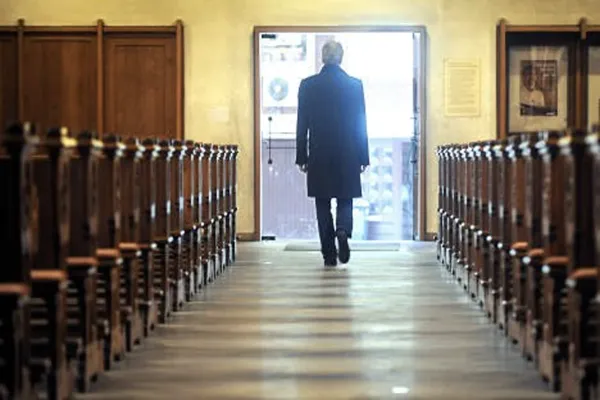
BISHOP STRIPPED OF VOTING RIGHTS IN HISTORIC PARLIAMENTARY MOVE

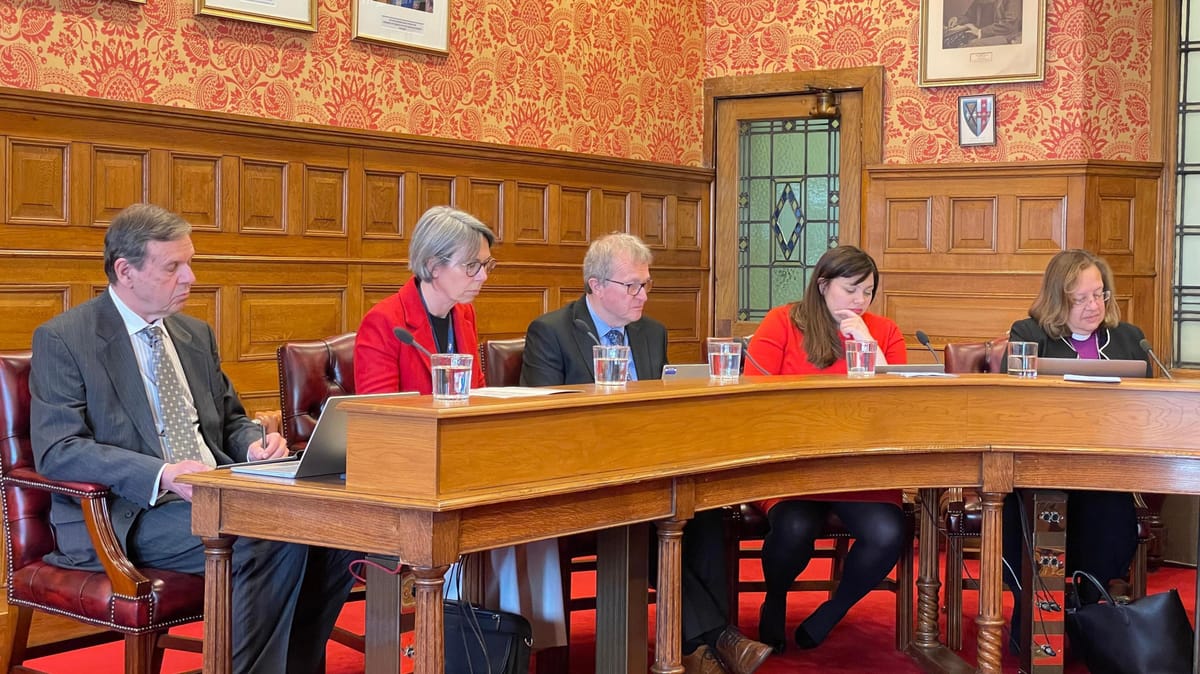
The Isle of Man's Legislative Council voted 5 to 3 on November 5, 2025, to pass the Constitution Bill 2023, which will remove the voting rights of the Bishop of Sodor and Man while allowing the bishop to retain their seat in parliament. The bill passed its final reading on November 11, 2025, and will now proceed to Royal Assent.
The Anglican Bishop of Sodor and Man currently sits and votes by right in the Legislative Council, the upper chamber of Tynwald, the Isle of Man's parliament. The bill, introduced by House of Keys member Lawrie Hooper in 2023, does not remove the bishop's seat but strips voting powers, ensuring that only elected officials can vote on making and changing laws.
An amendment was added specifying that Bishop Patricia Hillas will retain her vote until either her term ends or five years after the bill receives royal assent, whichever comes first.
The amendment originally required the vote to end three years after royal assent but was increased to five years following an intervention from Bishop Hillas herself.
Bishop Hillas opposed the removal of her voting right. Speaking during the debate, she said
"The bill argues for the retention of the bishop's seat, but to remove the vote. However, when contributions are separated from responsibility and accountability, democracy is undermined, and contribution simply becomes commentary."
In a pastoral letter to her diocese, Bishop Hillas asked for prayers, stating
"This is a significant development in our Island's life as a whole and touches deeply upon the heritage and identity of this Diocese. Our confidence does not rest in constitutional arrangements, roles, or votes, but in the faithfulness of God who has guided His people through every age."
Archbishop of York Stephen Cottrell previously expressed opposition to the plans, saying removing the vote would reduce the bishop to "something like a chaplain to Tynwald, rather than an equal member whose voice and opinion is taken seriously."
The National Secular Society and Humanists UK supported the measure. Megan Manson, NSS head of campaigns, stated, "This is a win for democracy and a landmark constitutional moment for the Isle of Man, with implications for Westminster."
Twenty six Church of England bishops also sit by right in Westminster's House of Lords. The Isle of Man bill has prompted calls for similar reforms at Westminster.
THE CRUSADER'S OPINION
The Isle of Man just told Christianity to shut up and sit down.
They stripped the bishop's vote while keeping her seat. She can talk, but she can't act. That's not representation. That's a museum display.
Secular activists celebrate this as progress. It's erasure.
For over 1,600 years, the bishop voted in Tynwald. Now elected officials decided Christian influence doesn't deserve equal power.
Bishop Hillas is right: contribution without accountability becomes mere commentary. They've made her a chaplain instead of a participant.
Westminster is watching. Twenty six bishops sit in the House of Lords. They're next.
Christianity shaped Western civilization. Now secular forces systematically remove Christian voices from power while keeping them as decorative relics.
TAKE ACTION
1. Support UK Christian advocacy: Donate to Christian Concern at www.christianconcern.com to defend Christian representation in UK governance.
2. Contact Westminster: Email your MP demanding protection for bishops' voting rights in the House of Lords. Find your MP at www.parliament.uk.
3. Pray for Bishop Hillas: Intercede for the Diocese of Sodor and Man as they navigate this constitutional attack on Christian influence.
FRANCE MOVES TOWARD LEGALIZING ASSISTED SUICIDE DESPITE RELIGIOUS OPPOSITION
THE NEWS
France's National Assembly adopted the Assistance in Dying Bill on May 27, 2025, by a vote of 305 to 199 in its first reading. The bill will allow adults with incurable illness to take lethal medication under certain conditions. The measure now moves to the Senate for debate, with a final vote potentially months away.
The proposed measure defines assisted dying as allowing patients to use lethal medication under certain conditions. Patients may take it themselves, or those whose physical conditions prevent them from doing so alone would receive help from a doctor or nurse.
To qualify, patients must be over 18, be French citizens or residents of France, and have a grave and incurable illness at an advanced or terminal stage causing intolerable and untreatable pain. A team of medical professionals must confirm these conditions. Patients with severe psychiatric conditions and neurodegenerative disorders such as Alzheimer's disease will not be eligible.
The bill was introduced by Olivier Falorni, a member of the MoDem group. French President Emmanuel Macron praised the vote as "an important step" on "the path of fraternity."
French religious leaders issued a joint statement in May denouncing the bill. The Conference of Religious Leaders in France, representing Catholic, Orthodox, Protestant, Jewish, Muslim and Buddhist communities, warned about the dangers of an "anthropological rupture." The statement said the proposed measures risk exerting pressure on vulnerable people.
A United Nations committee raised concerns about the bill's impact on disabled people, citing it as potentially problematic along with the lack of alternative options to euthanasia and insufficient information on safeguards.
The UN Committee for the Rights of the Handicapped stated the proposed bill has a "clear eugenist tendency reflecting validism deeply rooted in the State." The committee noted concerns about vague procedures for assisted suicide, lack of patient support and information concerning palliative care, and normalization of the concept of suicide.
Alliance VITA, a French pro life organization, warned that legalizing euthanasia or assisted suicide admits that some lives are not worth living, creating a category of people whose lives are of potentially lower value than others.
Opposition figures include 575 jurists who stated in a column that "the law on assistance in dying will establish death as a kind of therapy among others." Dutch professor Theo Boer, a former member of the supervisory commission for euthanasia law in Holland who now opposes it, came to France to warn about the impossibility of controlling the lifting of the prohibition against killing.
A parallel bill on palliative care to reinforce measures to relieve pain and preserve patients' dignity was also adopted unanimously on May 27.
THE CRUSADER'S OPINION
France calls killing "assistance in dying."
Every major religious community in France, Catholic, Orthodox, Protestant, Jewish, Muslim, Buddhist, united against this bill. The United Nations warned about eugenics and discrimination against the disabled.
France ignored them all.
This isn't compassion. It's state sanctioned death marketed as dignity.
The UN explicitly stated this bill has a "clear eugenist tendency" creating categories of people whose lives have lower value. Disabled people fear discrimination. Medical professionals warn about normalizing suicide.
But 305 French lawmakers decided death is therapy.
Western civilization is choosing extinction over suffering, convenience over sanctity, control over submission to God's timing.
Christians must oppose this everywhere it appears.
TAKE ACTION
1. Alliance VITA: Support French pro life advocacy opposing assisted suicide at www.alliancevita.org.
2. Contact French Embassy: Demand protection for vulnerable lives. French Embassy in US: +1 (202) 944 6000 or email [email protected].
3. Educate your community: Share information about euthanasia's dangers and the slippery slope from "dying with dignity" to eugenics targeting the disabled and elderly.
4. Pray for France: Intercede for French Christians resisting this legislation and for lawmakers to reject the bill in the Senate.