5 Billion Copies and Most Christians Don't Know Where Their Bible Came From
Most Christians have no idea how the 66 books of the Bible were assembled over 1,500 years by 40 authors into one volume.

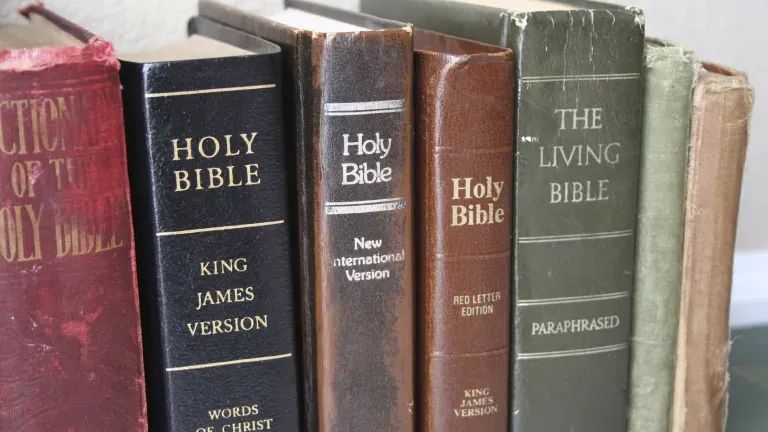
How Did We Get the Bible? The Surprising History Behind Scripture's 66 Books
The Bible remains the most distributed book in human history, with the Guinness World Records estimating between 5 and 7 billion copies in existence and roughly 80 million new copies sold every year. Yet most Christians have little understanding of how these 66 books, written by 40 authors over 1,500 years, were assembled into the single volume they trust with their eternal destiny.
Apologist Robin Schumacher argues that this knowledge gap leaves believers vulnerable to skeptical attacks. Writing for The Christian Post, Schumacher laid out the historical evidence for how both the Old and New Testaments were recognized as authoritative Scripture.
For the Old Testament, Schumacher pointed to Jesus Himself as the one who established the canon's boundaries. In Luke 11:51, Christ referenced events from Genesis through 2 Chronicles, the first and last books of the Hebrew Bible in its original ordering. Moses authored the first five books, which were stored inside the Ark of the Covenant and placed under the care of the Levitical priests.
"The Scripture cannot be broken." (John 10:35)
Jesus affirmed the divine authority of the Old Testament with those words, Schumacher noted, making clear that He considered every word of the Hebrew Scriptures to be the Word of God.
The New Testament canon followed a different but equally compelling path. The 27 books were formally recognized at the Council of Carthage in A.D. 397, but the early Church had already been treating these texts as Scripture for centuries. Clement of Rome cited New Testament writings as authoritative around A.D. 95. Polycarp did the same around A.D. 110. The Apostle Peter himself called Paul's letters "Scripture" in 2 Peter 3:15 through 16.
Schumacher took direct aim at popular myths, including claims made in Dan Brown's novel The Da Vinci Code, that the Church simply "decided" which books to include. The Latin word used at Carthage was "recipemus," meaning "we receive," not "we decide." The Church recognized the authority already present in these texts rather than imposing authority upon them.
The Biblical Canon: Why Every Christian Should Know How Scripture Was Formed

Schumacher concluded that Christians who understand the Bible's formation are far better equipped to defend their faith. The evidence, he argued, points to a God who carefully preserved His Word across millennia, through human authors, faithful scribes, and a Church that recognized divine authority when it encountered it.
The Crusader's Opinion
If you are staking your eternal soul on a book, you had better know where it came from. The Bible did not fall out of the sky, and it was not cobbled together by politicians at a committee meeting. It was written by prophets and apostles who bled for the words they penned, preserved by monks who gave their lives copying every letter by hand, and recognized by a Church that knew the voice of God when it heard it. The world throws Dan Brown novels and TikTok skeptics at us. Our response should not be silence. It should be knowledge. Know your Bible. Know where it came from. Then watch every argument against it crumble like dust.
Take Action
- Read the full article by Robin Schumacher at The Christian Post and share it with your church group.
- Study the history of the biblical canon. Start with "The Canon of Scripture" by F.F. Bruce or "How We Got the Bible" by Neil Lightfoot.
- Challenge your pastor to preach a sermon series on how the Bible was formed. Most congregations have never heard this taught from the pulpit.
- When a skeptic questions the Bible's reliability, ask them if they have read Clement, Polycarp, or Athanasius. Meet doubt with facts, not feelings.
- Support biblical literacy and persecuted believers who risk their lives to own a copy of Scripture at www.TheShepherdsShield.org and Open Doors.