Science Proves an Eclipse Was Impossible at the Crucifixion. So What Caused Three Hours of Darkness?
Astronomers confirm no solar eclipse could explain the three hours of darkness at the crucifixion. The Gospels describe a mystery science cannot solve.

Did a Solar Eclipse Really Cause the Three Hours of Darkness at Christ's Crucifixion?
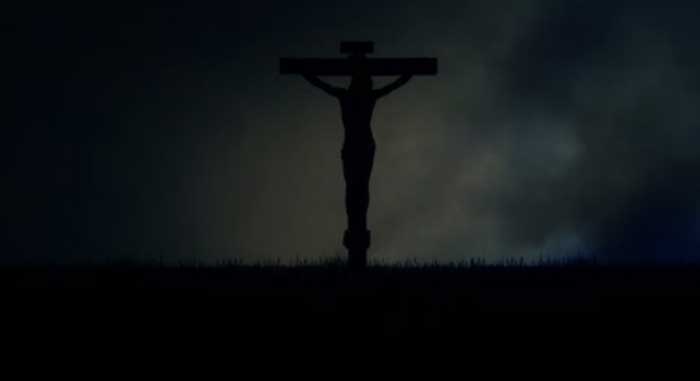
The Gospels of Matthew, Mark, and Luke all record that darkness covered the land from noon until 3 p.m. during the crucifixion of Jesus Christ. For centuries, scholars and believers have debated whether this darkness could have been caused by a solar eclipse.
The question centers on the Greek word "eklipontos," which appears in Luke's Gospel. While this word is the root of the English word "eclipse," most Bible translations render it simply as "darkening" or "the sun's light failed." Some modern translations, including the New American Bible, do translate it as "eclipse of the sun."
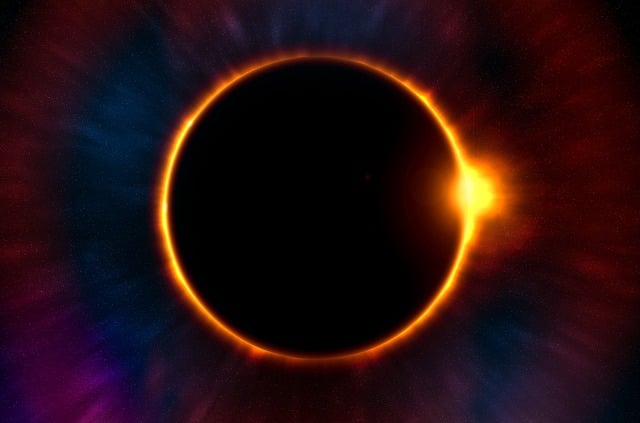
However, astronomers and biblical scholars have identified three major problems with the eclipse theory. First, the crucifixion took place during Passover, which always falls on a full moon. A solar eclipse requires a new moon, when the moon passes between the Earth and the sun. During a full moon, the moon is on the opposite side of the Earth, making a solar eclipse physically impossible.
Second, a total solar eclipse produces darkness lasting a maximum of seven minutes and 32 seconds at any given location. The Gospels describe three continuous hours of darkness, far exceeding what any eclipse could produce.
Third, modern astronomical software has confirmed that no solar eclipse occurred in the Holy Land between AD 29 and 36, the period during which historians date the crucifixion.
Cambridge scholars Colin Humphreys and Oxford's W.G. Waddington published research in Nature Magazine in 1990 suggesting the crucifixion may have occurred on Friday, April 3, AD 33, based in part on a lunar eclipse visible from Jerusalem that evening. Alternative natural explanations have included a khamsin dust storm, which Humphreys proposed in his 2011 book, noting such storms typically obscure the sun for several hours during March to May.
Why Scientists Say a Solar Eclipse Could Not Have Darkened the Sky When Jesus Died
Most ancient and medieval Christian writers treated the darkness as a miracle, not a natural phenomenon. The earliest manuscripts of Luke's Gospel use language that later scribes may have deliberately altered to avoid the apparent scientific contradiction of an eclipse during a full moon.
Starting from the Enlightenment era, some modern scholars have interpreted the darkness account as literary symbolism created by the Gospel writers to convey theological meaning about the cosmic significance of Christ's death. Others maintain it was a supernatural event, a sign from God that defies natural explanation.
The Crusader's Opinion
Science cannot explain away the darkness at the Cross, and that is precisely the point. The God who created the sun is fully capable of commanding it to stand down. For those who demand natural explanations for every act of God, consider this: the same science that proves an eclipse was impossible also cannot account for three hours of midday darkness over an entire land. The resurrection defied nature. The virgin birth defied nature. Why should the darkness at Calvary be any different? Our faith does not bend to the limits of human understanding. It transcends them.
Take Action
- Read: Open your Bible to Matthew 27:45, Mark 15:33, and Luke 23:44 this Easter season and reflect on what the three hours of darkness mean for your faith.
- Share: Send this article to a friend or family member who questions the historical reliability of the Gospels. Let the facts speak for themselves.
- Support: Donate to The Shepherd's Shield to help defend and spread the Christian faith worldwide.
- Discuss: Bring this topic up in your Bible study group or Sunday school class. Explore what the supernatural darkness reveals about God's sovereignty over creation.
- Pray: Ask God to strengthen the faith of believers who struggle with doubts, and to open the eyes of skeptics who dismiss the miracles recorded in Scripture.