
1,400 Year Old Marble Artifact Near Sea of Galilee May Rewrite Early Christian Baptism History
Archaeologists uncover a 1,400 year old marble artifact near the Sea of Galilee revealing early Christian baptismal rites at Hippos.

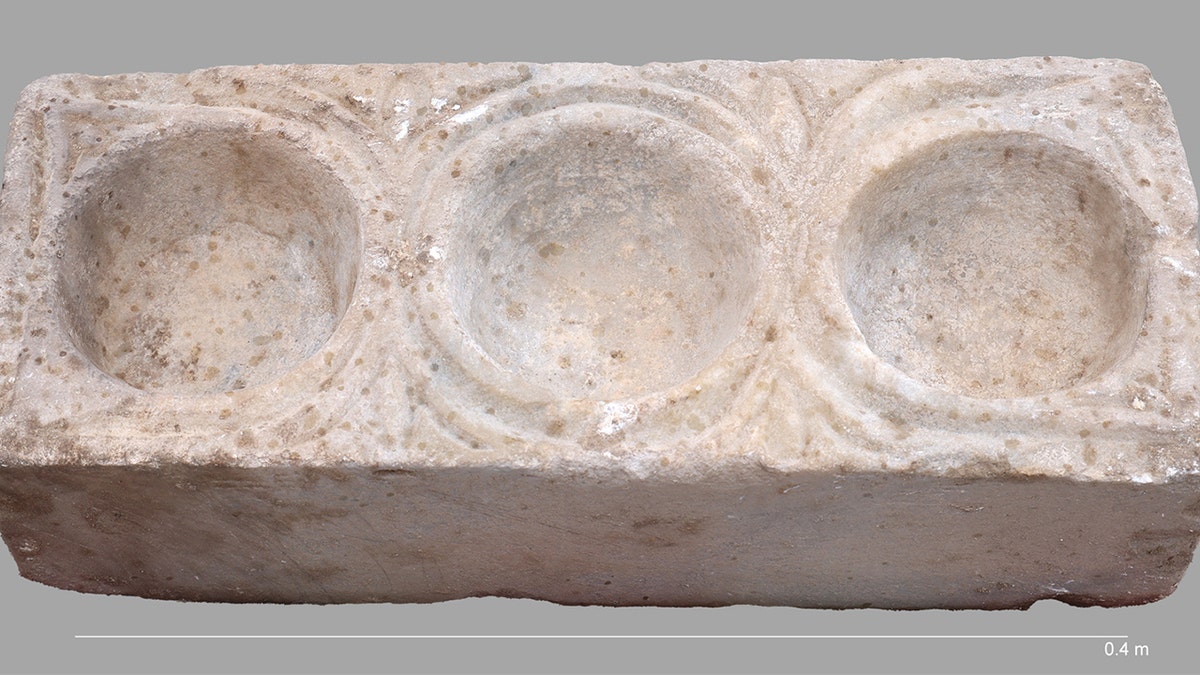
What Is the 1,400 Year Old Marble Artifact Found at Hippos Near the Sea of Galilee?
Archaeologists excavating the ancient city of Hippos, also known as Sussita, have uncovered a rare marble artifact believed to illuminate early Christian baptismal rites. The site sits on a plateau roughly 350 meters above the Sea of Galilee in Israel.
The object is a rectangular marble block with three identical hemispheric cavities carved into its top surface. Researchers estimate it is about 1,400 years old and say no known parallels have been found anywhere else in the archaeological record.
The discovery was announced by excavation directors Michael Eisenberg and Arleta Kowalewska of the Zinman Institute of Archaeology at the University of Haifa. The artifact was recovered from a photisterion, or baptismal hall, inside the Hippos cathedral.
The cathedral was constructed after 591 A.D. and was destroyed by a catastrophic earthquake in 749 A.D. Rubble from the collapse preserved the marble block and other bronze liturgical items until modern excavators reached them.
The discovery may shed light on the type of baptismal related rites practiced in the Hippos cathedral. Michael Eisenberg and Arleta Kowalewska
The leading theory from the research team is that the three cavities held the sacred oils used during the threefold baptismal immersion ceremony practiced by early Christians.
Alongside the marble block, excavators recovered a large bronze candelabrum that once illuminated the sacred space and a marble reliquary likely associated with the veneration of Christian martyrs.
Byzantine Era Baptismal Discovery Reveals Early Christian Worship Near Jesus Ministry Region

The Hippos cathedral stands out because it contains two photisteria, making it the only early church known to date with two baptismal halls within a single complex. The southern font appears to have been added after renovations around 590 to 591 A.D.
Researchers believe the space that now houses the southern photisterion may have originally served as a martyrion, a shrine honoring Christian martyrs, before being converted for infant and child baptism.
Excavations at Hippos have continued for more than 20 years under the direction of Eisenberg and Kowalewska. The region surrounding the Sea of Galilee is deeply tied to the earthly ministry of Jesus Christ.
The Crusader's Opinion
Every stone pulled from the dust of Israel testifies to the same truth the secular world keeps trying to bury: Christianity is historical fact, not fable. While modernists and skeptics mock the Gospels, the ground itself keeps vindicating Scripture. A marble block from a cathedral a stone's throw from where Jesus walked on water is not a coincidence. It is a reminder that our faith is rooted in real places, real people, and a real risen Lord. Defend that history. Teach it to your children. The stones are crying out.
Take Action
- Support Christian heritage preservation and persecuted believers in the Holy Land by donating to www.TheShepherdsShield.org
- Support the Biblical Archaeology Society to fund continued excavations at sites like Hippos: www.biblicalarchaeology.org
- Donate to Voice of the Martyrs to stand with persecuted Christians worldwide: www.persecution.com
- Plan a pilgrimage to the Sea of Galilee and Hippos with a Christian tour operator to walk where Jesus walked
- Share this archaeological evidence with skeptical friends and family as a conversation starter about the historical reliability of the New Testament